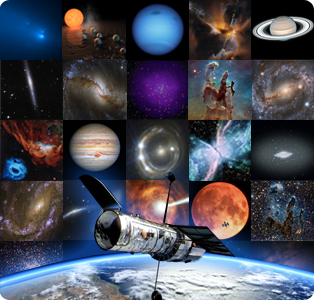
Hubble Space Telescope Continues Legacy with Solar System Complete and Beyond Observations
|
MONDAY Highlights…
|
 Dec 28 —
  Dec 28 — NewSpace:
  Dec 28 — USA: Incoming Administration may consider full support of Space Policy Directive-1 to land
 = All times
for terrestrial events in local time unless noted.
 = All times for international terrestrial events in local time unless noted.
 = All times for space events, and…
 = All times for international space / astro events in Hawaii Standard Time unless noted. Add 10 hours to obtain UT (‘Universal Time’).
Weekly Planet Watch – Evening Planets: Mars (S), Jupiter (SW), Saturn (SW), Uranus (SE), Neptune (SW); Morning Planets: Venus (SE).
2020s Multi World Civilization: The Moon, Global Revolutions, and Egalitarian Considerations
|
Dec 28 — Arianespace, Launch Soyuz / CSO 2, Sinnamary, French Guiana: Arianespace Soyuz rocket, designated VS25, to launch second Composante Spatiale Optique military reconnaissance satellite for CNES and DGA.
Continued From…
TUESDAY
WEDNESDAY
|
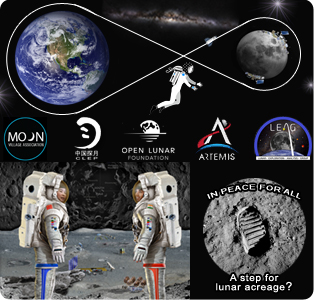 Commercial spacecraft in 2021 — Peregrine from Astrobotic and Nova-C from Intuitive Machines — are expected to attempt landings on the Moon for the first such American efforts in almost half a century, joining more-recent landers Chang’e-3, -4, -5, and ahead of India Chandrayaan-3, Russia Luna 25, and ispace of Japan. The 2020s landing of first women on the Moon should be as influential for the 21st century as the landing of first men on the Moon was for the 20th, and will expand the sphere of women’s freedom and activity by almost 1,000,000,000 times. Rapidly rising considerations for lunar resources and operations are manifest in the advocacies from LEAG, Moon Village Association, Artemis Accords, China Lunar Research Station, Open Lunar Foundation, and many more American and international Luna-interested enterprises and organizations. Perennial questions “Whose Moon Is It” and “Who Owns the Moon” now demand clear, principled, logical and operational understanding. As the Moon clearly belongs to Earth, and Earth’s people, it’s utilization may best be realized through a social-political-economic-international entity representing all humans and enabling both cooperative enterprise for the common wealth and egalitarian consideration for individual property. (Image Credits: )
THURSDAY
Dec 31 — Hubble Space Telescope, LEO: Spacecraft makes visible pass over Hawai’i starting 05:45:12 from NNW to 05:49:30 in NE, magnitude 2.1.
FRIDAY
NET 2021 — ISRO, Launch PSLV / Chandrayaan-3, Satish Dhawan Space Center, Sriharikota, India: Polar Satellite Launch Vehicle to attempt next lander and rover mission to Moon South Pole region possibly late this year; Chandrayaan-2 in lunar orbit to act as relay.
NET 2021 — International Lunar Observatory Association, Canadensys Aerospace Corp., Launch ILO-1, TBD: Launch of independent ILOA multifunctional observatory to Moon South Pole; will conduct radio astronomy, scientific & commercial communications, serve as catalyst for lunar base build-out.
NET 2021 — ISRO, Launch GSLV / Mars Orbiter Mission-2, Satish Dhawan Space Center, Sriharikota, India: India 2nd Mars mission to be launched this year with advanced science instruments to Mars orbit of 200 km x 2,000 km.
NET 2021 — Vera C. Rubin Observatory, Cerro Pachón, Chile: Previously dubbed Large Synoptic Survey Telescope, VCR Observatory team expects first light this year with full science operations starting Oct 2022.
NET 2021 — Mars World Enterprises Inc., Las Vegas NV: Hoping to open Mars World theme park by this year, created by John Spencer.
Jan 1 — Hubble Space Telescope, LEO: Spacecraft makes visible pass over Hawai’i starting 05:35:04 from N to 05:35:25 in N, magnitude 2.2.
Jan 1 — Deep Space, Kuiper Belt: New Horizons, collecting data from the edge of the Solar System, nearly 50 AU from Earth, will have 600-page technical compendium titled ‘The Pluto System after New Horizons’ published in 2021.
SATURDAY
Jan 2 — Earth: At perihelion, 0.9833 AU from Sun, 03:00.
Jan 2 — Moon: 4.5° NNE of Regulus, 16:00.
Jan 2, 3 — Quadrantids Meteor Shower Peak: Appearing to radiate from constellation Quadrans Muralis; can produce up to 110 meteors per hour.
SUNDAY
Jan 3 — Chang’e-4 Lander and Yutu-2 Rover, Statio Tianhe (Milky Way Base), Von Kármán crater, Moon South Pole–Aitken Basin, 177.6°E, 45.5°S: Spacecraft enter 3rd year / reach 2 full years on Moon far side, landed 2019.
Jan 3 — The Space Show, Online / Tiburon CA: Dr. David Livingston talks with Robert Wilson from the Aerospace Corp.
Jan 3 — Aten Asteroid 2020 YA1: Near Earth Flyby (0.010 AU)
Jan 3 — Aten Asteroid 2019 QW2: Near Earth Flyby (0.022 AU)
Jan 3 — Aten Asteroid 2003 AF23: Near Earth Flyby (0.047 AU)
MONDAY
Jan 4 — United Launch Alliance, Launch Atlas V / CST-100 Starliner Second Demo Flight, SLC-41, Cape Canaveral SFS FL: Boeing planning 2nd and final uncrewed demo test mission to ISS, before Astronaut flights.
Jan 4 — SpaceX, Launch Falcon 9 / Turksat 5A, Cape Canaveral SFS FL: Falcon 9 rocket to launch Turksat 5A communications satellite for Ku-band television broadcast services over Turkey, Middle East, Europe and Africa.
Jan 4 — Aten Asteroid 2012 BT1: Near Earth Flyby (0.016 AU)
TUESDAY
Jan 5 — National Academies of Sciences, Engineering and Medicine, Online / Washington DC: Planetary Science and Astrobiology Decadal Survey 2023-2032 – Panel on Mars Meeting #6.
Jan 5 — The Space Show, Online / Tiburon CA: Dr. David Livingston talks with Trent Tresch about SAM (Space Analog for the Moon and Mars) project.
Jan 5 — Moon: At last quarter, 23:37.
WEDNESDAY
Jan 6 — ISS, NG Cygnus CRS-14 Release, LEO: Northrop Grumman Cygnus freighter dubbed S.S. Kalpana Chawla to be released from ISS 09:45 EST with waste for re-entry disintegration in Earth atmosphere, live coverage available; NASA Glenn SAFFIRE V experiment to be conducted to examine fire growth in the range of pressures and oxygen concentrations.
Jan 6 — Hubble Space Telescope, LEO: Spacecraft makes visible pass over Hawai’i starting 06:19:29 from WNW to 06:23:09 in SSW, magnitude 0.8.
Jan 6 — Moon: 6.4° NNE of Spica, 20:00.
Jan 6 — Apollo Asteroid 2018 KP1: Near Earth Flyby (0.021 AU)
Jan 6 — Apollo Asteroid 332446 (2008 AF4): Near Earth Flyby (0.025 AU)
Jan 6 — Apollo Asteroid 2016 CO247: Near Earth Flyby (0.049 AU)
THURSDAY
Jan 7 — ISS, ~405-km LEO: In-flight education event with Million Girls Moonshot Education Group in San Diego CA and NASA Astronauts Kate Rubins and Shannon Walker, live coverage available.
Jan 7, 8 — American Astronomical Society, Online / Phoenix AZ: 22 Workshops and Meetings, in conjunction with American Astronomical Society meeting 237.
FRIDAY
Jan 8 — Royal Astronomical Society, Online / London, United Kingdom: Royal Astronomical Society (RAS) Ordinary Meeting; and Meeting: Exoplanet Modelling in the James Webb Era.
SATURDAY
Jan 9 — NARIT, Chiang Mai, Thailand: NARIT AstroFest 2021; hosting stargazing tours and various Astrophysics activities for domestic tourists.
Jan 9 — Moon: At perigee (distance 367,382 km), 05:47; 5.4° NNE of Antares, 20:00.
Jan 9 — Mercury: 1.61° SE of Saturn, 19:00.
Jan 9 — Apollo Asteroid 2019 NU13: Near Earth Flyby (0.038 AU)
SUNDAY
Jan 10 — American Astronomical Society, Online / Phoenix AZ: Grad School Fair & Exhibit Hall Preview Day; on the eve of American Astronomical Society meeting 237.
Jan 10-12 — AIAA, Online / Reston VA: International Student Conference.
Jan 10-15 — European Microwave Association, Institute of Engineering and Technology, IEEE, AESS, et al, Online / Utrecht, The Netherlands: 50th European Microwave Week; in conjunction with 17th European Radar Conference and 15th European Microwave Integrated Circuits Conference.
Jan 10-15 — American Meteorological Society, Online / New Orleans LA: 101st Annual Meeting of the American Meteorological Society.
Jan 10 — Mercury: With Jupiter and Saturn within circle of diameter of 2.39°, 09:00.