NASA Seeks Artemis Generation Astronauts to Explore Moon and Mars
NASA Administrator Jim Bridenstine wants all eligible Americans to consider if they are a good fit to join the elite ranks of active Astronauts, which currently number 48. Successful applicants will have a chance to live and work on the International Space Station and to “establish a permanent human presence on the Moon within the next decade to uncover new scientific discoveries and lay the foundation for private companies to build a lunar economy” which will “prepare humanity for future exploration to Mars”, according to NASA Moon to Mars Overview. Applications will be accepted from March 2 to 31, with selection expected to occur midyear 2021. Training at Johnson Space Center in Houston will follow for those selected to join the 350 total NASA-trained Astronauts. This Artemis class of astronaut candidates will be the 23rd to date – given the likelihood of interplanetary mission assignment interest may exceed the 18,300-application record set in 2015 for group 22. Prospects are expected to meet academic and professional standards and pass a long duration spaceflight physical evaluation. Candidates may recall the words of Eugene Cernan, last human to walk on the lunar surface in December of 1972, “we leave [the Moon] as we came and as we shall return… with peace and hope for all”. (Image Credits: NASA; Pictured L-R: NASA Spacesuit Engineer Amy Ross, Administrator Jim Bridenstine, Spacesuit Engineer Kristine Davis, and Orion Crew Survival Systems Project Manager Dustin Gohmert) |
MONDAY Highlights…
|

 Feb 24 —
  Feb 24 — NewSpace:
  Feb 24 — USA:
 = All times
for terrestrial events in local time unless noted.
 = All times for international terrestrial events in local time unless noted.
 = All times for space events, and…
 = All times for international space / astro events in Hawaii Standard Time unless noted. Add 10 hours to obtain UT (‘Universal Time’).
Weekly Planet Watch – Evening Planets: Venus (W), Mars (SE), Jupiter (SE), Uranus (WSW); Morning Planets: Saturn (SE).
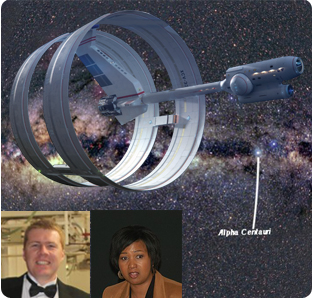
Interstellar Organizations Work Toward Future Breakthroughs |
Feb 24 — Lunar and Planetary Laboratory, University of Arizona, Tucson AZ: Probing the Escaping Atmospheres of Exoplanets; by Antonija Oklopčić, Sagan Fellow, from Harvard University, 15:45.
Continued from…
TUESDAY
|
Feb 25-26 — Air and Space Museum at Paris-Le Bourget Airport, Proximum Group, Paris, France: 6th Paris Space Week 2020.
Feb 25-27 — Johns Hopkins Applied Physics Laboratory, Laurel MD: Access to Space Workshop: Increased Science Return through Rideshare and Utilizing Excess-mass Lift Capacity Workshop.
Feb 25-28 — Earto, 3AF, Clean Sky 2, ESA, SESAR, CEAS, AIAA, Bordeaux, France: Aerospace Europe Conference (AEC2020).
Feb 25-28 — International Lunar Observatory Association, Chinese Society of Astronautics, NAOC / CAS, International Astronautical Federation, Canadian Space Agency, Hainan, China: Galaxy Forum Hainan 2020: China – themed International Human Moon Landings, and Astronomy from the Moon; Postponed to 12-15 Jan 2021 [TBC].
Feb 25 — Mercury: at inferior conjunction with Sun, 0.637AU from Earth, 16:00.
WEDNESDAY
Feb 26 — Moon Village Association regional Australian coordinator, Exaptec, Space Association of Australia, Melbourne, Australia: Public Forum on The Moon ‘Mini’.
Feb 26 — Mars Society Netherlands, Copernicus Observatory, Overveen, The Netherlands: Meeting: Ethical Discussion on the Colonization of Mars.
Feb 26-28 — National Science Foundation, High Altitude Observatory, Boulder CO: Michael Knoelker Symposium: From Solar Physics to Exoplanets.
Feb 26 — Moon: at apogee (distance 406,288 km), 01:00.
Feb 26 — Apollo Asteroid 2012 DS30: Near-Earth Flyby (0.031 AU)
THURSDAY
Feb 27 — Rob and Terry Ryan Foundation, W. M. Keck Observatory, Kamuela HI: Cosmic Events: The Darkest Secrets of the Universe; presented by Raja Guhathakurta from University of California at Santa Cruz; HPA Gates Performing Arts center, 19:00.
Feb 27 — NASA Astrophysics Division, Online / Washington DC: NASA Astrophysics Virtual Town Hall; 13:00-14:00 EST.
Feb 27 — AIAA San Francisco Section, International Space Station (ISS) U.S. National Laboratory, Mountain View CA: Dinner Meeting / Panel Discussion about the ISS National Lab; featuring Miki Sode from ISS National Laboratory, Ron Goedendorp from NanoRacks, Daniel Faber from OrbitFab.
Feb 27 — Moon: 5.8° SE of Venus, 08:00.
Feb 27 — Apollo Asteroid 2020 DZ1: Near-Earth Flyby (0.019 AU)
FRIDAY
Feb 28 — NASA, Johns Hopkins Applied Physics Laboratory, Laurel MD: Lunar Surface Innovation Consortium; academia, industry and government to discuss technologies and systems needed to explore the surface of the Moon in new ways.
Feb 28 — STEAMSPACE, Austin TX: Cities in Space 2020 Student Competition and Conference; at Huston-Tillotson University.
Feb 28 — International Astronautical Federation, Dubai, UAE: Abstracts Due: 71st International Astronautical Congress (IAC 2020); being held Oct 12-16.
Feb 28 – Mar 6 — Gemini Observatory, ‘Imiloa Astronomy Center, Mauna Kea Observatories, UH Hilo, Keck Observatory, CFHT, et al, Hilo HI: Workshop: Journey Through the Universe 2020.
Feb 28 — Moon: 4.0° SE of Uranus, 06:00.
SATURDAY
Feb 29 — Artemis Space, SpaceUp, Wales, United Kingdom: SpaceUp Wales; the Unconference for all things Space Exploration.
Feb 29 — Griffith Observatory, Los Angeles CA: Griffith Observatory Public Star Party.
Feb 29 — Earth Leap Day, Global: Third planet from the Sun adds day in various solar calendars every 4 years due to Earth period of orbital revolution around the Sun taking approximately 6 hours longer than 365 whole days.
Feb 29 — Apollo Asteroid 2020 DV1: Near-Earth Flyby (0.026 AU)
Feb 29 — Apollo Asteroid 2015 BK509: Near-Earth Flyby (0.048 AU)
SUNDAY
NET Mar 1 — ISRO, Launch GSLV Mk.2 / GISAT 1, Satish Dhawan Space Center, Sriharikota, India: Geosynchronous Satellite Launch Vehicle Mk. 2, designated GSLV-F10, to launch India first GEO Imaging Satellite.
Mar 1 — Deep Space: New Horizons in Kuiper Belt sending gigabytes of data back to Earth, including recently published images of Arrokoth; this summer Team researchers will scan sky searching for 3rd potential object to fly by.
Mar 1-6 — University of Chile, University of Sao Paulo, et al, Concepcion, Chile: Conference: First Stars VI.
Mar 1 — Moon: 7.0° SE of Pleiades, 12:00.
Mar 1 — Apollo Asteroid 2017 BM123: Near-Earth Flyby (0.027 AU)